


BY MORGAN CHILSON
Kansas Reflector
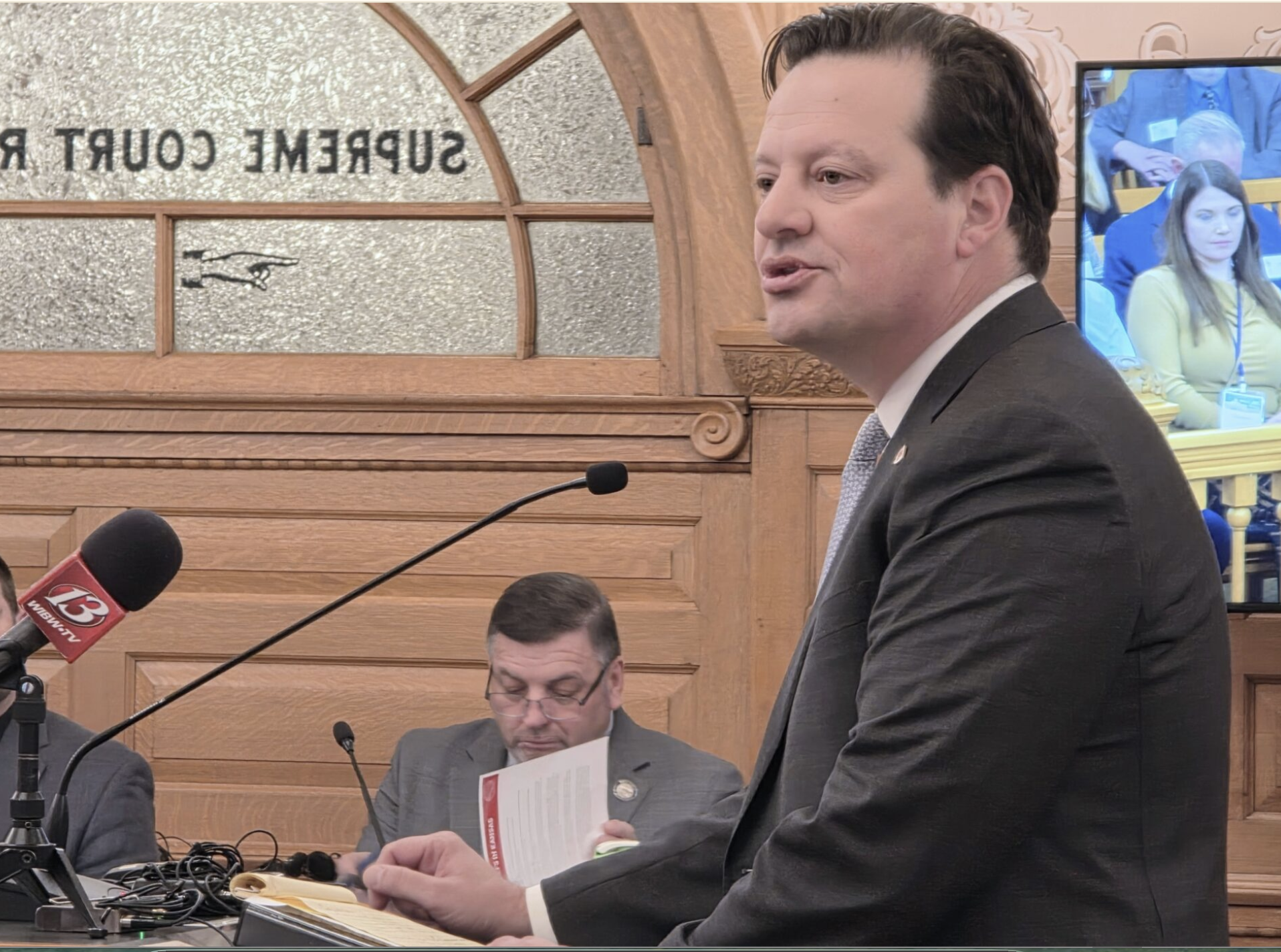
TOPEKA — A Kansas City Chiefs attorney told legislators Wednesday that projections show STAR bonds financing the team’s stadium deal will be paid off 10 to 15 years earlier than the expected 30-year term, upping economic benefits for the state.
Korb Maxwell, a Chiefs attorney, told legislators the planned $3 billion domed stadium and mixed-use development in Wyandotte County, and a $300 million Chiefs headquarters and training facility in Johnson County, will add to the state coffers earlier than expected.
He addressed a joint meeting of the Senate and House commerce committees, where legislators put him on the hot seat for an hour as they attempted to clear up “confusion” and answer constituent concerns about the deal.
Most of the questions, couched from different angles, came down to the dollars — how do the economics of the deal work for Kansas, how will Kansans living in the western part of the state benefit and is the estimated $1 billion economic impact realistic?
While many specifics of the plan are still in planning stages, Maxwell said, the STAR bonds — or sales tax and revenue bonds — are projected to pay off early, which will then push the revenue to the state’s treasury years ahead of time.
The Chiefs project will be funded through a 60-40 public-private partnership, according to terms posted online by the Kansas Department of Commerce. The state’s 60% of funding will come from a mix of STAR bonds and the Attracting Professional Sports to Kansas Fund, which is revenue from iLottery and sports betting. STAR bonds also will be repaid with 100% of liquor sales tax collected in the district.
Aside from expected benefits of 20,000 construction jobs and $4 billion in investment during the building phase, Maxwell touted long-term effects.
“This is also about 4,000 permanent careers, hundreds of millions of dollars in annual payroll once the team starts playing,” he said. “It also includes visiting team payroll, broadcaster payroll, concerts, major national events, Republican or Democratic conventions that could be hosted.”
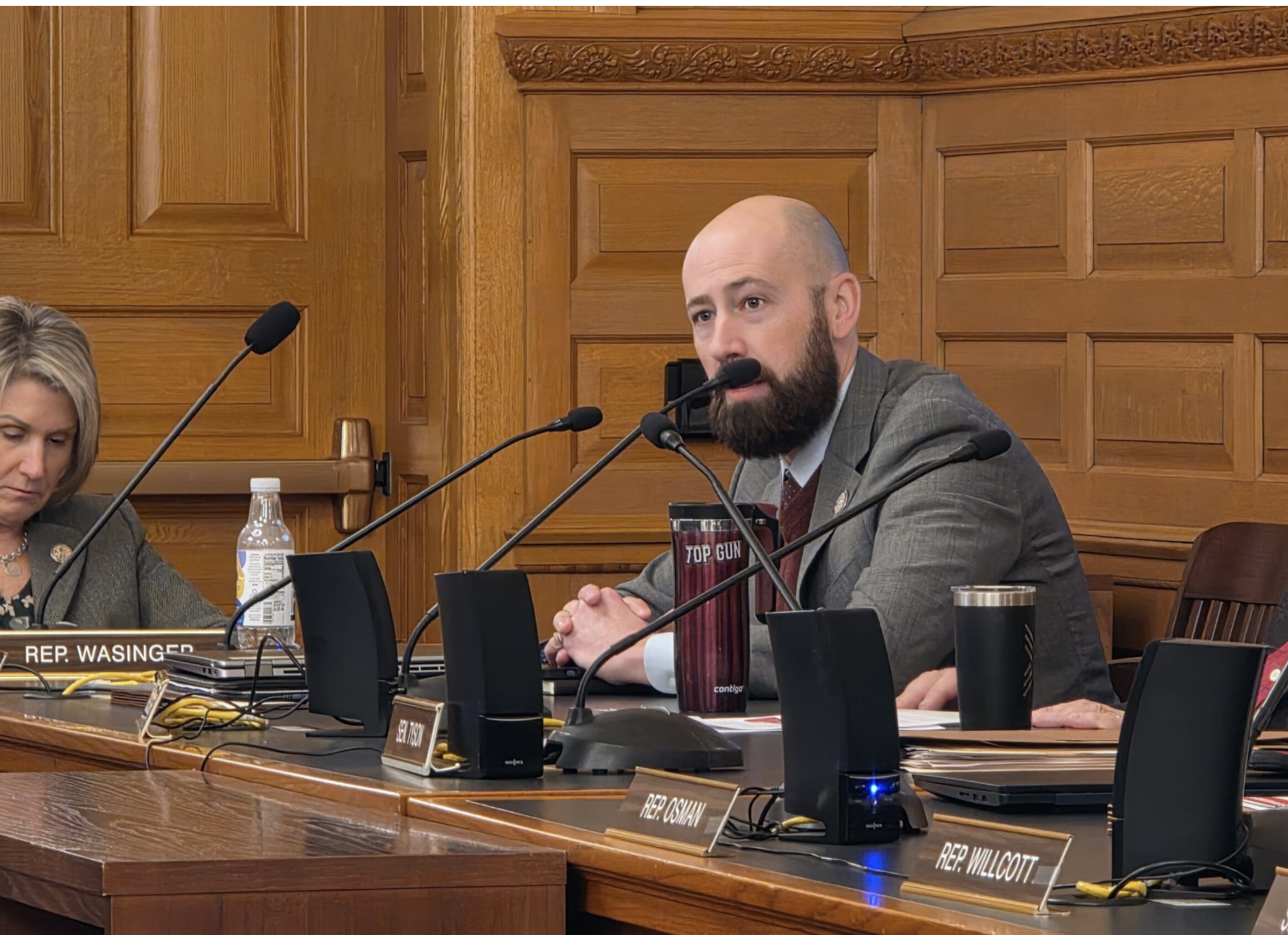
Sen. Kenny Titus, a Wamego Republican, wasn’t convinced about the economic benefits.
“I do appreciate the optimism that this will be one of the first stadiums to pay for itself in new growth, so it will be interesting to watch that play out,” he said, adding that he’d like to know what happens if in 30 years the Chiefs moved again, leaving an empty stadium.
Maxwell answered by explaining the level of investment being made by the team showed their commitment to the stadium project, and also pointed out the team has been at its current location for more than 60 years.
“We absolutely plan to be there for the very long term,” he said.
Rep. Sean Tarwater, a Republican from Stilwell who chairs the House commerce committee, asked Maxwell about information he hears repeatedly that all emails, contracts and other aspects of the deal would be kept private until 2029.
Maxwell said he didn’t know where that idea came from because his understanding was that Kansas open records and open meetings laws wouldn’t allow that to happen.
However, the reference to a July 1, 2029, deadline comes directly from the 2024 special session law that allows the Kansas Department of Commerce to negotiate a deal to move the Chiefs or the Royals to the state.
House Bill 2001 says negotiations and documentation around sports team deals would not be subject to open records requests and would remain confidential until July 1, 2029.
The intent of the Commerce Department is to maintain transparency, which is why the terms sheet and other documentation were made public on the agency’s website when the announcement was made in December, according to Rachel Willis, director of legislative affairs for the Commerce Department.
After the legislative hearing, she affirmed that even though that language is in HB 2001, the agency will only hold back sensitive information for short periods of time, such as maintaining confidentiality that may affect issuing the STAR bonds. Otherwise, transparency on this deal is important, she said.
Rep. Stephanie Sawyer Clayton, D-Overland Park, questioned the use of other tax incentives programs, such as a Community Improvement District, which would put a special tax on a designated area that would go to pay off the STAR bonds.
“This is the first I’d heard about it, so I am curious to know, do we know where that CID would be, and would it only apply to things that are built after the formation of the district?” she said. “I don’t like CIDs in general, when they include places where people have to shop. We have to get gas. We have to go to the grocery store. I don’t mind economic development incentives when there’s choice involved.”
Maxwell said the CID would be for the development the Chiefs are building and new developments around the stadium. Adding a CID is part of the reason the STAR bonds are projected to pay off more quickly than the 30-year term.
Sawyer Clayton also confirmed with Maxwell that labor used to build the stadium would be primarily union workers.
Legislators peppered Maxwell with questions, including whether work is being done to address needed infrastructure changes in the area where the stadium will be located next to the Kansas Speedway, whether local governments were partnering with the state on the project and how the future looks for economic development around the stadium.
Although Maxwell said many of the items were in early stages and emphasized the Chiefs and Commerce Department are working with local entities, he said the Chiefs are already in discussion with developers interested in being part of the mixed-use development.
“Our phone has been ringing off the hook since the moment that we announced in Kansas on Dec. 22, and we are considering all of those possibilities and looking at, is that right to go in Olathe? Is that right to go in Wyandotte County?” he said.