


MARC JACOBS
Hutch Post
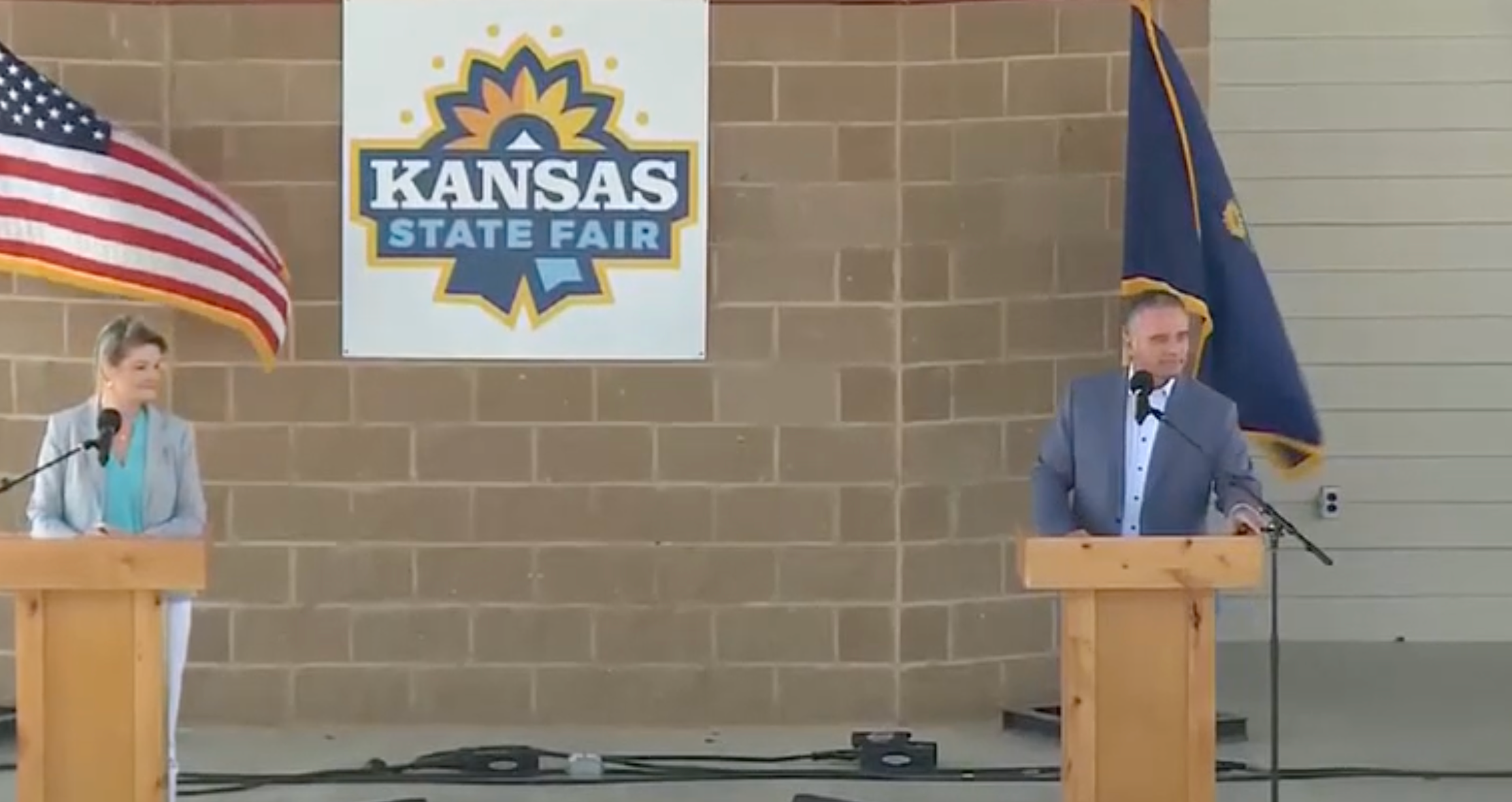
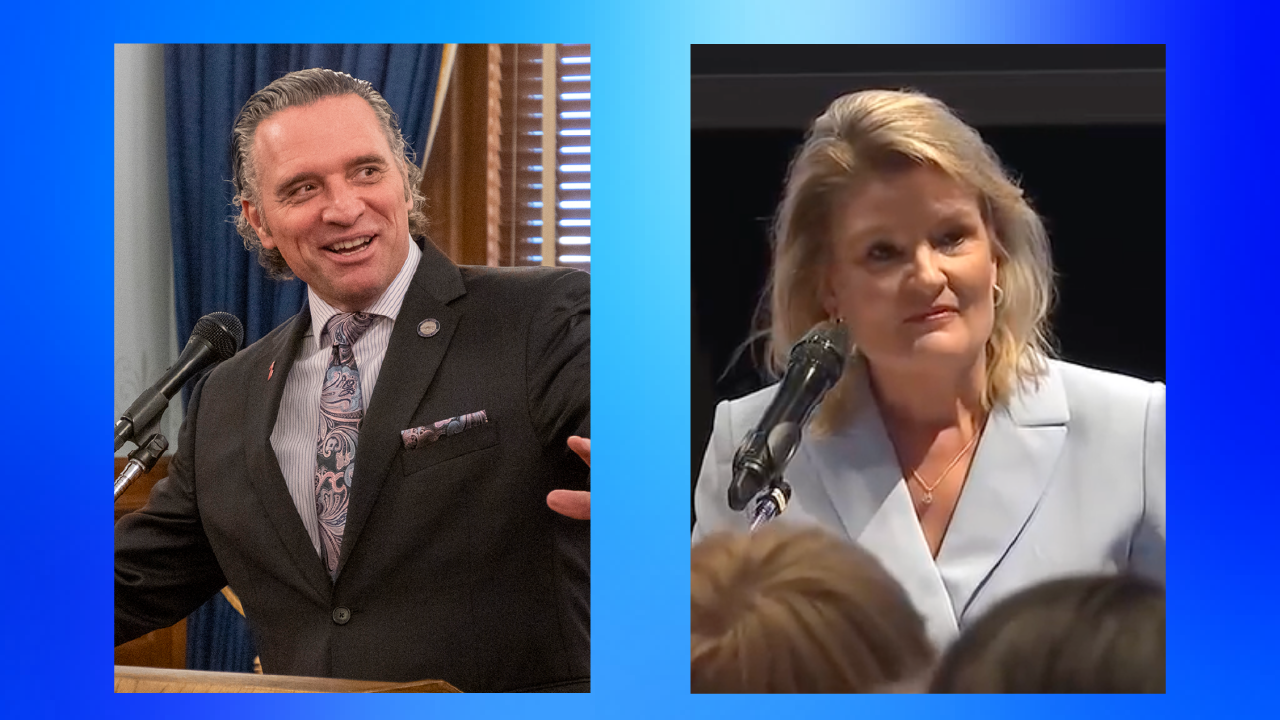
HUTCHINSON, Kan. — Republican Ty Masterson and Democrat Cindy Holscher presented sharply different visions for Kansas during a gubernatorial debate Saturday at the Kansas State Fair.
Masterson, the Kansas Senate president, emphasized tax reductions, local control and business growth. Holscher, a state senator, called for greater investment in public schools, health care and rural communities.
The debate at the Heartland Credit Union Pavilion covered water, data centers, agriculture, abortion, immigration, rural hospitals, education and economic development.
Water policy became an early point of disagreement. Masterson said lawmakers have committed record funding to the issue but must ensure the money is used responsibly. He said local leaders should help balance the needs of irrigators and rural communities.
Holscher said Kansas must fully fund its water plan and listen to farmers who are already adopting more efficient irrigation methods. She also argued that water protections must be considered before additional data centers are approved.
Both candidates said data centers could create economic opportunities but require safeguards.
Holscher said her position changed as she learned more about the facilities’ potential effects on water supplies, utility rates and farmland. She called for stronger protections and the use of union labor during construction.
Masterson said developers should cover their electricity costs so nearby customers do not face higher rates. He also called for protections involving water, land and eminent domain but said local governments should decide whether projects are appropriate.
The candidates also disagreed over rural health care. Holscher said expanding Medicaid would be the most important action her administration could take to protect rural hospitals.
“You lose your hospital, you lose care, and you lose good jobs,” Holscher said.
Masterson rejected Medicaid expansion as the solution. He instead advocated for higher reimbursement rates, provider assessments and targeted rural health funding. He argued expansion could divert resources from people Medicaid was originally designed to serve.
On affordability, Masterson pointed to state income-tax reductions, the elimination of state taxes on Social Security benefits and efforts to reduce property taxes.
“You cannot tax your way to prosperity,” Masterson said. “What government does to put more money in your pockets is take less.”
Holscher said the Legislature has spent too much time debating transgender issues while Kansans face rising costs. She called for affordable housing, a higher minimum wage and expanded access to health care.
Agriculture remained a recurring theme. Holscher criticized tariffs, beef imports and immigration enforcement actions that remove workers from farms and meatpacking plants. She said both political parties have failed to establish an effective immigration system.
Masterson said foreign-born workers are important to Kansas agriculture but must have legal status. He supported expanding visa opportunities for dairies and other agricultural businesses that need employees throughout the year.
Masterson also promoted year-round sales of E15 and higher ethanol blends, saying biofuels can reduce prices at the pump while providing another domestic market for Kansas crops.
The candidates differed on incentives intended to bring the Kansas City Chiefs across the state line. Masterson defended the package, saying it would generate jobs, private investment and new tax revenue without increasing existing taxes.
Holscher welcomed the possibility of bringing the team to Kansas but said billionaires should pay for their own stadiums. She promised to ensure the project produces union jobs, livable wages and opportunities for local businesses.
Education produced another clear divide. Holscher opposed allocating more public money to private-school vouchers, arguing the programs frequently benefit families whose children already attend private schools.
Masterson supported expanding parental choice while also strengthening public schools. He identified literacy as a major concern and called for Kansas to adopt strategies used by Mississippi to improve reading performance.
The debate frequently turned personal. Masterson repeatedly characterized Holscher as an extreme liberal whose policies would increase taxes and regulation. Holscher linked Masterson to former Gov. Sam Brownback’s tax policies and accused him of favoring corporations and wealthy donors.
In his closing statement, Masterson framed the election as a choice between empowering families and increasing government control. He promised to promote affordability, economic growth, successful schools, prosperous farms and safer communities.
Holscher said the choice was between policies benefiting corporations and those serving working Kansans. She promised to place families, public schools and local communities first.